LAO :+856-30-942-9667

Future of Ground Handling Trends & Technologies
Airport ground handling operations are at the heart of airline efficiency and passenger satisfaction. From marshaling aircraft to loading baggage and refueling, these tasks must be performed quickly and safely to minimize turnaround time.
In recent years, new technologies and innovative processes have begun transforming ground handling, promising faster operations and fewer errors. This article explores the major trends and technologies shaping the future of airport ground handling.
Automation and Autonomous Equipment
Automation is revolutionizing ramp operations with driverless vehicles and robotics. Airports are beginning to deploy autonomous baggage tractors and cargo loaders capable of navigating the apron without human drivers.
For example, Singapore Changi Airport has tested autonomous baggage vehicles to improve aircraft turnaround efficiency and address labor shortages. Similarly, autonomous pushback tugs are being introduced to move aircraft without traditional towbar systems.
These technologies improve safety and reduce manual workload for ground staff.
Data-Driven Operations and IoT
Modern ground support equipment is increasingly connected through Internet of Things (IoT) sensors.
These sensors monitor:
- Equipment location
- Battery or fuel levels
- Mechanical performance
- Maintenance needs
Real-time data helps airports perform predictive maintenance, reducing equipment failures and operational delays. Centralized monitoring systems allow operations managers to track all ground equipment across the apron.
Artificial Intelligence in Turnaround Management
Artificial Intelligence is improving aircraft turnaround coordination.
AI-powered platforms analyze data from cameras, sensors, and airport systems to monitor operations such as:
- Baggage loading
- Fueling
- Cleaning
- Catering
- Passenger boarding
Some airports use AI systems to predict delays and optimize scheduling, helping reduce ground delays and improve aircraft turnaround times.
Digital Twins for Airport Operations
A digital twin is a virtual model of airport operations.
Airports can simulate ground handling processes to identify bottlenecks and test operational improvements without affecting real-world operations.
For example, researchers have simulated airport ramp activities using digital twin technology to optimize resource allocation and reduce departure delays.
Virtual Reality Training for Ground Staff
Training for ground staff is evolving through Virtual Reality (VR) and Augmented Reality (AR).
VR simulations allow personnel to practice tasks like:
- Aircraft marshaling
- Baggage loading
- Pushback operations
- Emergency procedures
Airlines such as All Nippon Airways have introduced VR training programs to enhance staff preparedness and reduce training time.
Workforce Transformation
Technology is reshaping the roles of ground handling workers.
Instead of performing purely manual tasks, staff are increasingly responsible for:
- Monitoring automated equipment
- Managing data systems
- Supervising autonomous vehicles
New roles such as fleet control operators and automation supervisors are emerging in modern airports.
Cybersecurity in Ground Operations
As airport operations become more connected, cybersecurity has become a major concern.
Ground handling systems such as baggage handling networks and fuel infrastructure must be protected from cyber threats.
Airports are investing heavily in cybersecurity monitoring tools, staff training, and network protection systems to ensure operational safety.
Sustainable Ground Handling
Environmental sustainability is another major trend shaping ground handling.
Airports are transitioning to:
- Electric ground support vehicles
- Renewable energy infrastructure
- Low-emission airport equipment
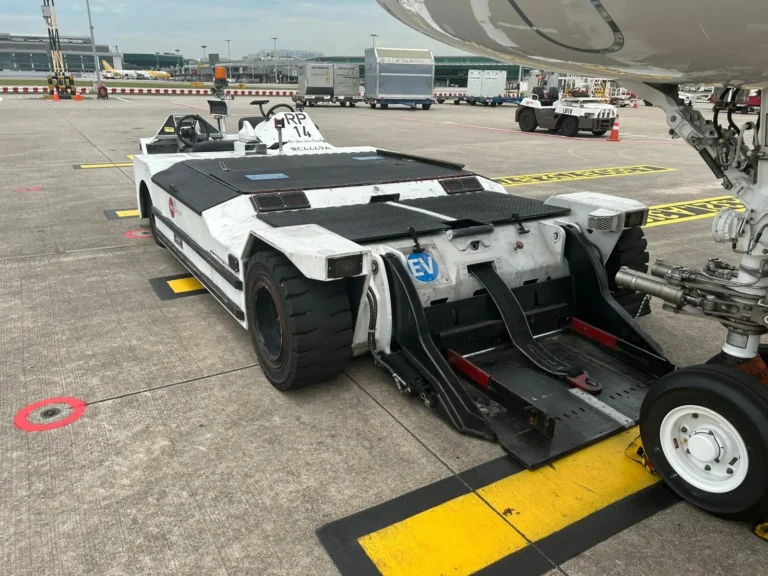
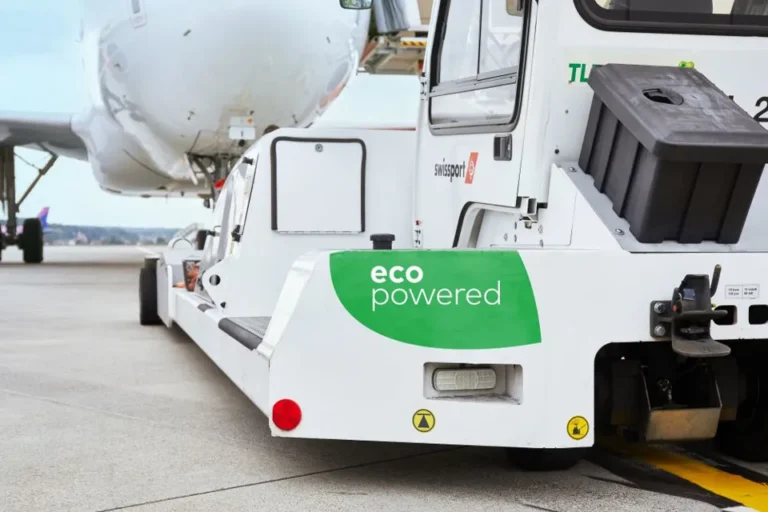
Electric baggage tractors and pushback tugs reduce emissions, noise pollution, and fuel consumption while supporting global aviation sustainability goals.
Conclusion
The future of ground handling lies in automation, intelligent data systems, and sustainable technologies.
Innovations such as autonomous vehicles, AI-powered monitoring, digital twins, and VR training are transforming airport ground operations. These technologies will improve efficiency, safety, and environmental performance while creating a more seamless travel experience for passengers worldwide.